
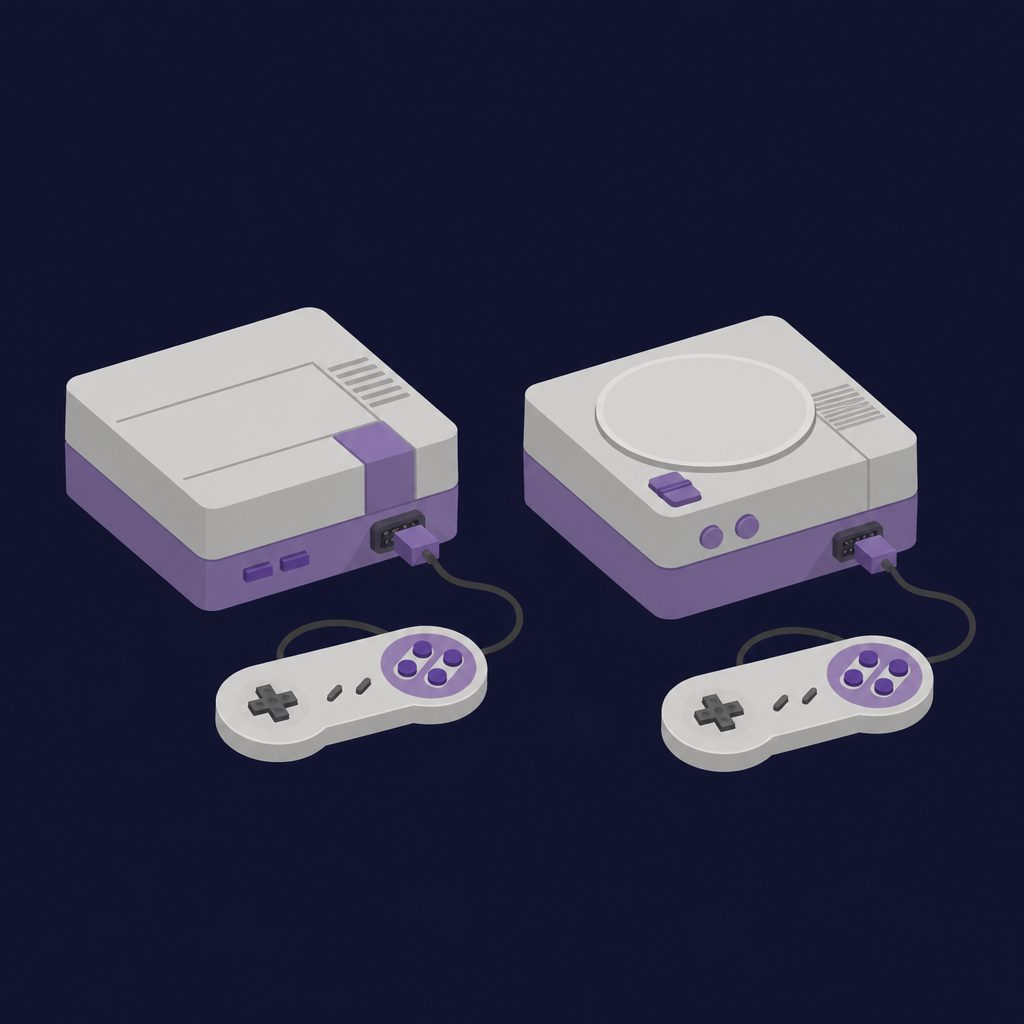
Nintendo shipped a $59.99 palm-sized box with 30 games built in, and within days it was reselling for triple that on eBay. The NES Classic Edition wasn’t a niche collector item. It was mainstream news by Christmas 2016, and the shortage that followed became as much a part of its story as the games packed inside it.
The 2016 Shortage
Nobody at Nintendo seemed to fully anticipate what they had. The NES Classic launched into a market already primed for nostalgia by a wave of documentaries, retro conventions, and a resurgent interest in 8-bit game design, and a $59.99 device that let anyone plug the NES back into a current television arrived at exactly the right cultural moment. It wasn’t marketed as a collector’s item. It became one anyway, almost by accident.
Nintendo released the NES Classic Edition on November 11, 2016. It was small, plugged into an HDMI TV, ran on a USB-C cable, and reproduced the original NES library through built-in emulation with a wired controller modeled directly on the console’s original pad. Thirty games came preloaded, from Super Mario Bros. to Mega Man 2 to Kirby’s Adventure, a genuinely well-curated lineup rather than a padded list.
Demand overwhelmed supply almost instantly. Retail stock vanished on release day nationwide, restocks sold out within minutes online, and secondary-market prices climbed well past $200 for a console that listed at $59.99. Nintendo discontinued it in April 2017, citing production limits, less than half a year after launch. The shortage didn’t cool interest. If anything it did the opposite, cementing the NES Classic as one of the hardest holiday gifts to actually find that generation.
The SNES Classic, and a Sequel Nobody Expected
Nintendo answered its own supply crisis with a bigger, better-stocked follow-up. The SNES Classic Edition launched September 29, 2017, at $79.99, with 21 games built in. Most were the expected greatest hits: Super Mario World, The Legend of Zelda: A Link to the Past, Super Metroid, Donkey Kong Country.
One title on that list wasn’t a rerelease at all. Star Fox 2 had been finished for the original SNES back in the mid-1990s, then shelved when the Nintendo 64 and its 3D graphics made a 16-bit space shooter feel dated before it ever shipped. It sat unreleased for more than two decades until Nintendo quietly included it on the SNES Classic, giving an entire generation of players a first look at a “new” Super Nintendo game in 2017.
What’s Actually Inside These Things
Neither console is real vintage hardware. Both run software emulation on custom internal chips designed for the purpose, output over HDMI rather than the composite or RF connections original consoles used, and lock their game libraries to whatever Nintendo chose at launch, no cartridge slot, no way to add anything official. That’s a deliberate trade, not an oversight: it’s exactly what let both devices sell at a price close to what a single loose original cartridge often costs today, with zero maintenance concerns about aging connectors or yellowed plastic.
Discontinuation, Again
Nintendo pulled the NES Classic from production a second time, then reversed course again. Facing continued demand and riding the SNES Classic’s stronger, less shortage-plagued launch, Nintendo re-released the NES Classic on June 29, 2018. Both mini consoles were then discontinued together in December 2018, closing out roughly two years combined of on-and-off production for the pair.
Only One Controller, and Then Two
The NES Classic shipped with a single controller, a decision that drew immediate criticism given how many of its 30 built-in games, from Double Dragon II to Balloon Fight, are built around two-player local play. Buyers had to purchase a second controller separately, and thanks to the same shortage that made the console itself hard to find, that second controller was often just as difficult to track down at launch. Nintendo corrected the oversight with the SNES Classic, which shipped with two controllers standard from day one, a small change but a clear sign the company had been listening to the first round of complaints.
How They Compare to the Real Thing
Neither mini console tries to be a substitute for an original NES or SNES in every respect, and it’s worth being direct about where it falls short. Original hardware plays the entire cartridge library, including obscure and unlicensed titles Nintendo would never curate onto official hardware, and it connects to a CRT the way these games were actually designed to be seen, with none of the input lag some HDMI displays introduce. The mini consoles trade all of that away for something original hardware can’t offer: guaranteed reliability, a single small box instead of a shelf of cartridges, and a picture that looks correct on a modern television without an upscaler in the chain. For someone who wants to play thirty specific childhood games without maintaining thirty-year-old cartridge connectors, that trade is an easy one. For a completionist chasing the full library, it was never meant to compete.
The Modding Scene Nintendo Didn’t Plan For
Both consoles turned out to be more flexible than Nintendo intended. Within months of the NES Classic’s release, a community project called Hakchi emerged, letting owners reflash the console’s internal storage to add far more than the original 30 games, using the same official emulation core Nintendo had already built in. The SNES Classic received the same treatment. Neither modification is officially sanctioned, and it requires comfort with USB flashing tools most casual buyers won’t bother with, but it turned a fixed 21- or 30-game device into something closer to a full-library emulation box, running on hardware Nintendo itself validated for the job. It’s part of why interest in these two small consoles never fully faded even after Nintendo stopped making them.
Worth Buying in 2026?
Not new, since neither is in production, and used units now typically sell above their original launch prices. The more relevant comparison today is Nintendo Switch Online, whose subscription tiers have steadily expanded to cover much of the same NES and SNES catalog, plus titles neither mini console ever included. For anyone already paying for Switch Online, that overlap makes a used NES or SNES Classic a harder sell purely on game access.
The mini consoles still have an argument. They’re dedicated hardware with no subscription, no account login, no internet dependency, and the exact curated lineup Nintendo assembled rather than a rotating online catalog. For a shelf, a kid’s bedroom TV, or someone who wants Nintendo’s classics without touching a Switch at all, that simplicity still counts for something.
The Wave They Started
Nintendo’s mini consoles reshaped how the whole industry thought about legacy hardware. Sony followed with the PlayStation Classic in December 2018, a launch widely criticized for a thin game selection and emulation that ran noticeably worse than the originals. Sega’s Genesis Mini, arriving in September 2019, corrected course by handing emulation duties to M2, a developer with a reputation for hardware-accurate ports, and it’s generally regarded as the strongest mini console of the entire cycle Nintendo kicked off almost by accident with a $59.99 box in 2016.
For more on the systems these mini consoles were built to imitate, see the Super Nintendo console page, or browse the retro handheld and rarest consoles guides for related collecting angles.
Frequently Asked Questions
When did the NES Classic Edition release?
Nintendo released the NES Classic Edition on November 11, 2016, at $59.99, with 30 built-in NES games. It sold out almost immediately and stayed difficult to find for the rest of its production run.
Why was the NES Classic discontinued and then brought back?
Nintendo discontinued the NES Classic in April 2017 after months of persistent shortages, citing production constraints. Demand never went away, and combined with the success of the SNES Classic that followed, Nintendo revived production and relaunched the NES Classic on June 29, 2018, before discontinuing it again in December 2018.
What games come with the SNES Classic?
The SNES Classic Edition, released September 29, 2017 at $79.99, includes 21 built-in games, among them Star Fox 2, a sequel that had been finished for the original SNES in the mid-1990s but never officially released until it shipped on this mini console more than two decades later.
Are the NES Classic and SNES Classic worth buying in 2026?
Original units are long out of production and now sell above their launch prices on the secondary market. For most players, Nintendo Switch Online's expanding NES and SNES libraries cover similar ground through an active subscription with less upfront cost. A used mini console still appeals to anyone who wants dedicated, subscription-free hardware and the specific curated lineup Nintendo chose.
Did the NES Classic and SNES Classic start the mini-console trend?
They're widely credited with kicking off the modern wave. Sony followed with the PlayStation Classic in December 2018 to a lukewarm reception over its game selection and emulation quality, while Sega's Genesis Mini, released in September 2019, was better received and used authentic hardware-accurate emulation from developer M2.