
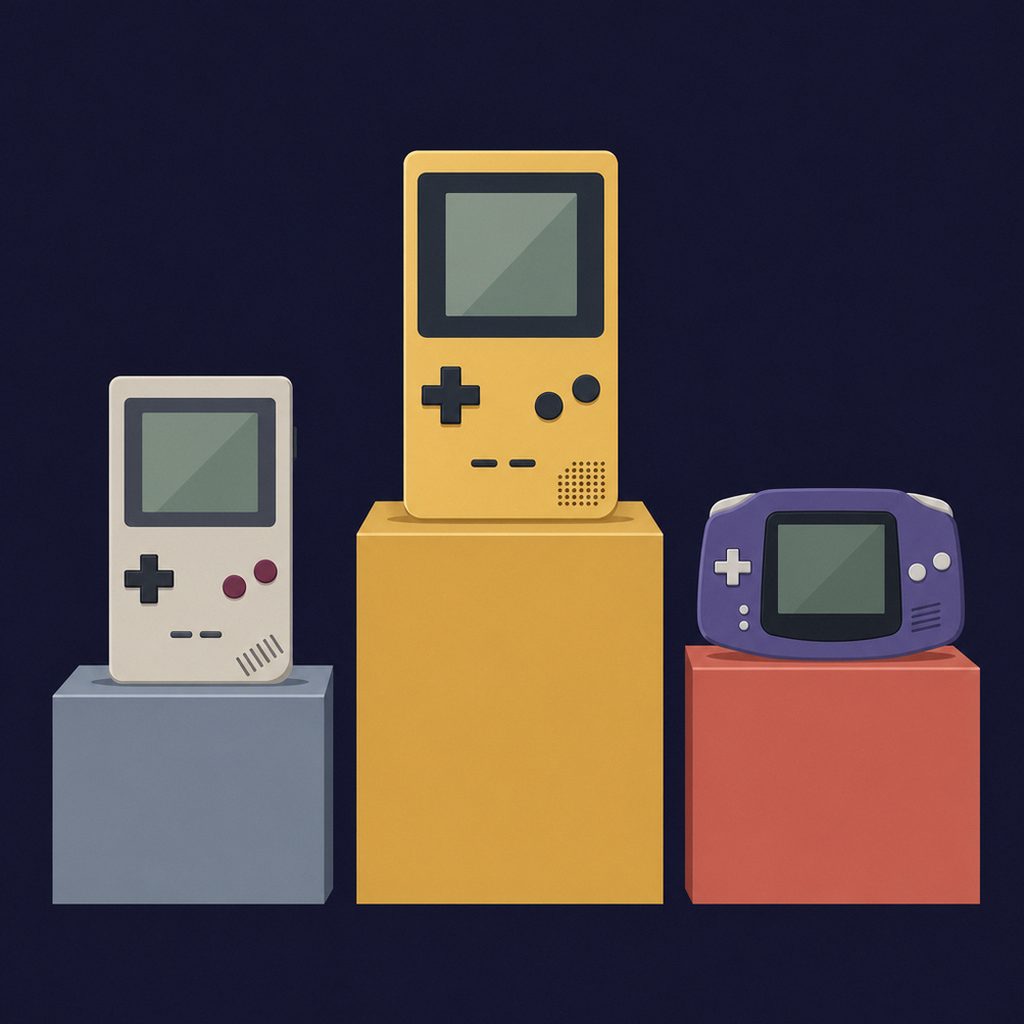
The phrase “retro handheld” now covers two very different things: the original portable consoles that defined classic gaming, and a new wave of inexpensive modern devices built specifically to play those old libraries. This guide ranks both, judged on the factors that actually matter to a portable: library quality, screen and ergonomics, battery life, and value. It covers genuine vintage hardware worth owning and the best modern emulation handhelds for those who would rather not hunt for cartridges. For the broader picture of what portable consoles are and how the market is structured, see the main handheld game consoles guide.
Two Kinds of Retro Handheld
Before ranking anything, it helps to separate the categories. Original hardware means the actual Game Boy, DS, or PSP, playing genuine software — the authentic experience, with the collectible value and the maintenance quirks that come with decades-old electronics. Modern emulation handhelds are new devices, usually running Linux or Android, that reproduce classic systems in software; they trade authenticity for convenience, large built-in libraries, and modern screens. A third, premium branch reproduces old hardware at the chip level using FPGA technology and plays real cartridges. The rankings below treat these on their own terms rather than forcing them into one list.
Best Original Retro Handhelds
Best Overall: Nintendo Game Boy Advance SP
The Game Boy Advance SP (2003) is the most practical vintage Nintendo handheld to own today. Its clamshell design protects the screen, the later AGS-101 revision added a genuinely bright backlit display, and a single internal rechargeable battery removed the AA dependency of earlier models. Crucially, it plays the entire Game Boy Advance, Game Boy Color, and original Game Boy libraries — three generations of portable software, including Pokemon, Metroid: Zero Mission, The Legend of Zelda: The Minish Cap, and Super Nintendo-class platformers. It is durable, affordable, and complete.
Best Library: Nintendo DS Lite
The DS Lite (2006) is the most elegant member of the best-selling handheld family in history; the DS line sold around 154 million units, and that scale produced an enormous and inventive catalog. The dual-screen, touch-driven design enabled games impossible elsewhere — The World Ends With You, Phoenix Wright, Mario Kart DS, Pokemon HeartGold/SoulSilver — and the system also plays the entire Game Boy Advance library through its second cartridge slot. For sheer breadth of original software, nothing portable rivals it.
Best for Console-Style Games: Sony PSP
The PSP (2004–2005) remains the most impressive handheld for players who want full console-scale 3D experiences on the move. Its wide 16:9 screen and capable hardware delivered titles like God of War: Chains of Olympus, Crisis Core: Final Fantasy VII, and Monster Hunter Freedom Unite. The proprietary UMD optical format is its weak point — discs are bulky and drives wear — but the slimmer later models and a deep library make it a standout. The full story is on the Sony PSP page.
The Icon: Original Nintendo Game Boy
The original Game Boy (1989) earns its place on history alone. Its monochrome screen was outclassed at launch by color rivals, yet its battery life, durability, price, and library made it untouchable; the Game Boy line went on to sell roughly 119 million units. As a device to play today it is the least convenient on this list — no backlight, AA batteries — but for collectors and purists it is the foundation of portable gaming, and titles like Tetris, Link’s Awakening, and Pokemon Red/Blue remain essential.
Best Modern Retro Handhelds (Emulation)
For players who want the classic libraries without sourcing decades-old hardware, a category of purpose-built emulation handhelds has matured rapidly. These are the strongest current picks, though specific models update frequently.
Best Budget Pick: Miyoo and Anbernic Entry Models
Compact Linux-based handhelds from Miyoo and Anbernic, frequently sold for well under $100, comfortably emulate everything from the NES and Game Boy through the Super Nintendo, Genesis, and Game Boy Advance. Their small vertical or horizontal slab designs echo the original Game Boy, and their value is unmatched for anyone whose interest stops at the 16-bit and 32-bit eras. They are the most cost-effective entry into portable retro gaming.
Best for Power: Higher-End Android Handhelds
Android-based devices from brands such as Retroid and Ayn push into more demanding systems — PSP, Nintendo DS, Dreamcast, and beyond — with larger screens, analog sticks, and stronger chips. They cost more and require more setup, but they cover the widest range of classic platforms in a single device and double as general Android handhelds.
Best Premium Pick: Analogue Pocket
The Analogue Pocket takes a fundamentally different approach. Rather than emulating in software, it uses an FPGA chip to recreate original hardware at the circuit level and plays genuine Game Boy, Game Boy Color, and Game Boy Advance cartridges through its slot, with adapters extending support to other classic handhelds. Its high-resolution screen renders pixel art with exceptional fidelity. It is the most expensive option here, aimed at enthusiasts who want hardware-accurate playback of authentic cartridges.
What “Preloaded Games” Really Means
Many inexpensive handhelds are marketed as arriving with thousands of preloaded games. This claim deserves scrutiny. Genuine, licensed preloaded collections do exist — official miniature and plug-and-play systems ship with a curated, legal selection of classic titles. The bulk-loaded “10,000 games” devices, by contrast, typically rely on unlicensed software, and the legality of distributing those libraries is questionable. A device’s hardware quality, screen, controls, and emulation accuracy are far more reliable buying criteria than a headline game count, and they are what the rankings above weigh.
How to Pick the Right One
The decision comes down to authenticity versus convenience. A buyer who values the original experience, collectibility, and genuine cartridges should choose vintage hardware or an FPGA device like the Analogue Pocket. A buyer who simply wants to play the classics comfortably, with a modern screen and a large library on one device, is better served by an emulation handheld. Either way, the principles from the wider portable gaming guide hold: match the device to the library you actually want, and weigh battery life and ergonomics over raw specifications. Collectors deciding which full platforms to invest in will also find the retro collecting guide useful, while the handheld console generations breakdown explains where each classic device sits in the timeline.
Frequently Asked Questions
What is the best retro handheld console?
For original hardware, the Game Boy Advance SP is the most practical pick, playing three generations of Nintendo portable games in a durable backlit clamshell. For modern emulation, an Anbernic or Miyoo handheld offers the best value, while the Analogue Pocket is the premium FPGA choice.
What is the best retro handheld with preloaded games?
Licensed plug-and-play and official miniature handhelds ship with a curated, legal selection of classics. Be cautious of cheap devices advertising thousands of preloaded games, as those libraries are usually unlicensed. Judge a handheld on its screen, controls, and emulation quality rather than the headline game count.
Are modern retro handhelds legal?
The devices themselves are legal hardware. The legal question concerns the games: emulating systems you own and dumping your own cartridges is one matter, while bulk-loaded libraries of copyrighted ROMs are generally unlicensed and legally questionable.
What is the difference between emulation and FPGA handhelds?
Emulation handhelds reproduce a classic system in software, which is flexible but can introduce inaccuracies. FPGA devices like the Analogue Pocket recreate the original hardware at the circuit level and can play genuine cartridges, offering hardware-accurate playback at a higher price.
Which original handheld has the best game library?
The Nintendo DS family, the best-selling handheld line in history at around 154 million units, has the deepest and most inventive original library, and it also plays the entire Game Boy Advance catalog.
Is the original Game Boy still worth buying?
It is the least convenient device to play today, with no backlight and AA batteries, but it remains essential for collectors and purists as the foundation of portable gaming, with classics like Tetris, Link's Awakening, and Pokemon Red and Blue.