
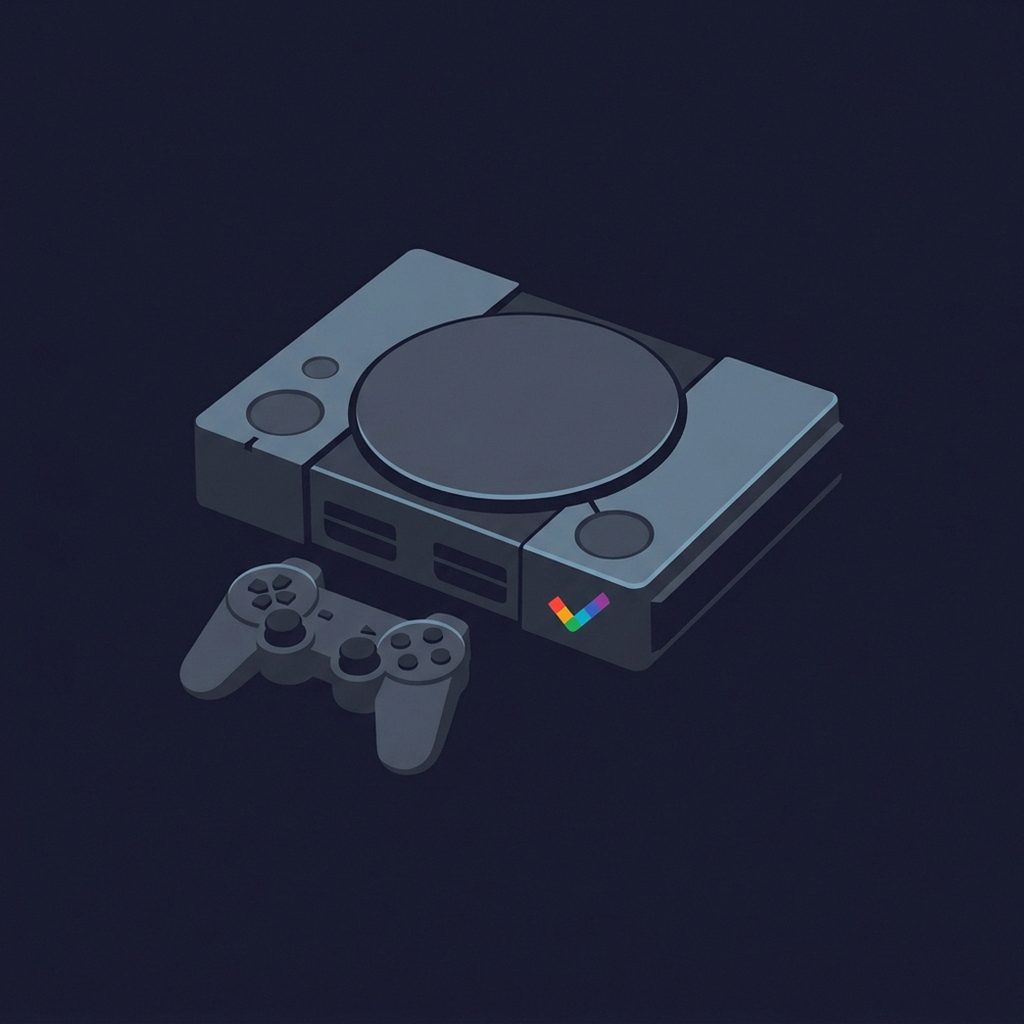
In February 1994, boxes of a brand-new game console sat finished in a manufacturing facility in the Philippines, built, tested, and going nowhere. A federal injunction in the United States had just barred Commodore International from importing them. Six weeks later, the company that invented the Amiga was bankrupt, and the console inside those boxes, the Amiga CD32, effectively died with it.
Europe’s First 32-Bit CD Console
Rewind five months. Commodore launched the CD32 in the United Kingdom and continental Europe on September 17, 1993, at roughly $399 (around £299 in the UK), and the pitch was genuinely ahead of its time. Built on the same AGA chipset that powered the Amiga 1200 computer, the CD32 married a real 32-bit graphics architecture to a built-in CD-ROM drive, months before Sega’s CD add-ons matured and roughly a year before Sony’s PlayStation or Sega’s Saturn reached any Western market. For a brief window, it had a legitimate claim to being the most technically advanced console a consumer could buy in Europe.
The launch bundle paired the console with two games: Diggers, a strategy title from developer Millennium Interactive, and Oscar, a platformer from Flair Software. A later retail bundle swapped in the fighting game Dangerous Streets instead. None of them became system-sellers on the scale Commodore needed.
Racing 3DO and Sega CD to Market
The CD32 wasn’t launching into empty space. Panasonic’s 3DO Interactive Multiplayer hit US shelves the same October at $699.99, more than triple the CD32’s $399 price. Sega’s Sega CD add-on for the Genesis, already on the market since 1992 at $299, offered a cheaper if less technically impressive path into CD-based gaming for owners who already had the base console. Positioned between the two on price, and ahead of both on raw graphics hardware, the CD32 had a genuinely coherent commercial argument for the European market it actually reached. It’s one of the reasons the American injunction stings so much in hindsight: on paper, Commodore had priced and specced the console correctly. It just never got the chance to prove it against the competition it was built to beat.
The Patent That Sank the US Launch
Commodore had planned a US debut for early 1994, at the same $399 price point, with two pack-in games and six additional launch titles lined up for release. It never happened. A company called Cad Track Corporation held US Patent 4,197,590, covering XOR-related display technology, and argued Commodore’s hardware infringed on it. Commodore faced a deadline to pay roughly $10 million in royalties. When the company didn’t, a federal judge issued an injunction blocking Commodore from importing anything at all into the United States, not just the CD32.
That’s a strange kind of failure. The CD32 wasn’t rejected by American shoppers, reviewed poorly, or beaten by a competitor at retail. It was stopped by a courtroom before it ever reached a shelf. A trickle of units still entered the country informally, through Canadian resellers and a handful of UK trading houses willing to ship across the Atlantic, but there was never a real, sanctioned American retail presence.
What Made the Hardware Different
The CD32 wasn’t a repackaged computer with a disc drive bolted on, even though it shared its foundation with the Amiga 1200. Its AGA (Advanced Graphics Architecture) chipset supported a palette of 262,144 colors and resolutions well ahead of most cartridge-based competitors still on shelves in 1993, and a custom chip nicknamed Akiko handled CD-ROM data decoding and provided hardware-level chunky-to-planar graphics conversion, a technical detail that mattered enormously for the kind of fast 3D and rendered graphics CD-ROM games were starting to attempt. None of that showed up on a spec sheet a shopper glanced at in a store window, but it meant the CD32 was, chip for chip, a genuinely more capable machine than the Sega CD add-on or the original 3DO console it launched alongside.
The console also inherited something no rival could claim: compatibility with a mature library of existing Amiga computer software, adapted for a joypad rather than a mouse and keyboard. That gave the CD32 a running start on content in a way the 3DO, launching with a library built from scratch, simply didn’t have.
Bankruptcy, Weeks Later
Commodore International filed for bankruptcy in April 1994. This was a company that, a decade earlier, had sold the Commodore 64, one of the best-selling home computers ever made, in the tens of millions. By 1994 it was gone, and the CD32, discontinued only about eight months after its European debut, went with it. Total sales across Europe during that short window landed around 100,000 units, roughly 25,000 of them in Germany alone.
It’s worth sitting with how fast that timeline actually moved. Most console failures play out over a year or two of disappointing sales, price cuts, and slow retreat. The CD32 went from a genuinely ambitious hardware launch to a dead product line in under eight months, undone by a mix of legal misfortune and a parent company that had been financially unstable for years before the console ever shipped.
Not Commodore’s First Attempt at This
The CD32 wasn’t even Commodore’s first swing at CD-ROM gaming. Two and a half years earlier, in March 1991, the company had launched the CDTV, a CD-ROM-equipped multimedia platform built on the older Amiga 500’s architecture and priced at a steep $999. It flopped commercially, selling only in small numbers, largely because it was marketed as a living-room multimedia appliance rather than a games console and cost roughly five times what the CD32 would later ask. The CD32 was, in part, a correction of the CDTV’s mistakes: cheaper, unambiguously positioned as a game console, and built on far newer graphics hardware. It still didn’t survive long enough to prove whether that correction would have worked.
Collector Status Today
The CD32 occupies an odd corner of retro-collecting precisely because of how it died. It has real cachet among Amiga enthusiasts, who value it as the platform’s last gaming-focused hardware release, and its complete absence from the official US market means North American collectors are chasing import units by definition, not domestic stock that simply became scarce. Finding a working unit paired with a healthy chunk of its CD-based library takes more patience than sourcing a Sega CD or 3DO from the same window, both of which sold in far greater numbers and shipped through normal US retail channels.
Whether the CD32 would have actually succeeded in the US is a question nobody ever got a real answer to, and it’s worth sitting with rather than resolving too neatly. A $399 machine with genuinely superior graphics hardware to its nearest CD-based rivals had a real shot at American shelves in early 1994. It’s just as plausible it would have joined the Sega CD and 3DO on the long list of CD add-ons and consoles that generated more press coverage than actual sales that year. The patent injunction erased the chance to find out either way, which is part of what keeps the CD32 an object of fascination rather than a settled case of a bad product meeting its deserved fate.
The Cad Track patent, incidentally, wasn’t unique to the CD32. It applied to Commodore’s Amiga line broadly, which means the same ruling that kept the CD32 out of American stores was also choking off Commodore’s existing computer business at the exact moment the company most needed cash to survive.
For where the CD32 sits among the wider field of consoles that never found an audience, see the rarest consoles guide.
Frequently Asked Questions
What was the Amiga CD32?
The Amiga CD32 was a home console released by Commodore International in Europe on September 17, 1993, built on the Amiga 1200's AGA chipset with a built-in CD-ROM drive. It was marketed as the first 32-bit CD-based console to reach the European market, arriving ahead of the Sega Saturn and PlayStation.
Why was the Amiga CD32 never officially sold in the US?
Commodore faced a $10 million patent royalty demand from Cad Track Corporation over US Patent 4,197,590, an XOR-related patent. A federal judge granted an injunction barring Commodore from importing products into the United States, which blocked the planned American CD32 launch just as it was set to begin.
When did Commodore go bankrupt?
Commodore International filed for bankruptcy in April 1994, roughly six months after the CD32 launched in Europe and only weeks after the US import injunction took effect. CD32 production and sales ended as a direct result.
How many Amiga CD32 units were sold?
Estimates put total European sales around 100,000 units during its brief market life, with roughly 25,000 of those in Germany. That makes it one of the more obscure consoles of the early-1990s CD-console wave, well behind the Sega CD and 3DO.
What games came with the Amiga CD32?
The initial UK launch bundle included Diggers, a strategy game from Millennium Interactive, and Oscar, a platformer from Flair Software. A later bundle swapped in the fighting game Dangerous Streets.
Is the Amiga CD32 worth collecting today?
It holds genuine niche appeal among Amiga collectors specifically because it never had an official US release, making complete North American-market examples uncommon by definition. Working units and their CD-based game library require more patience to track down than more common systems from the same era.