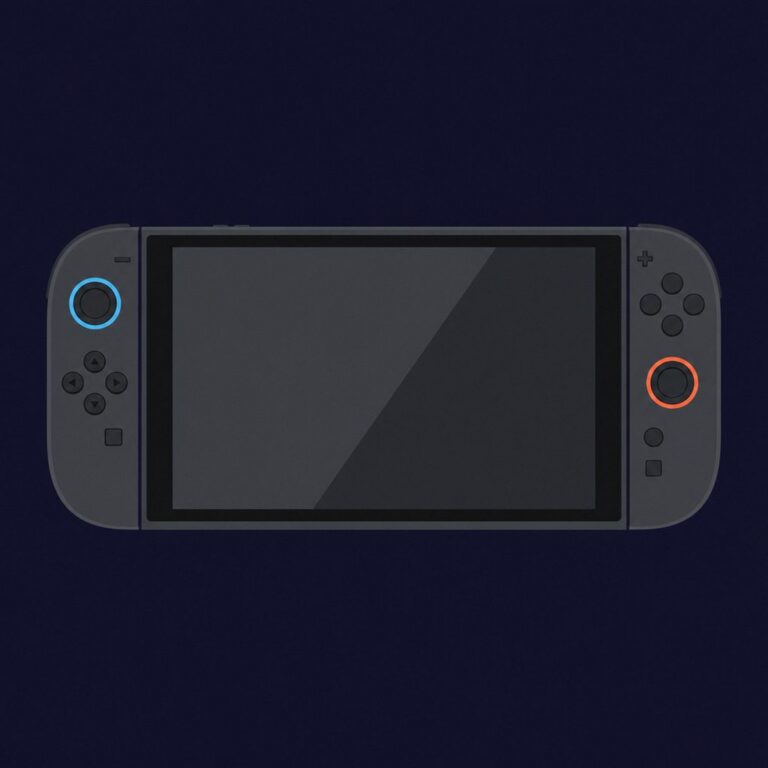
The Nintendo Switch 2 launched worldwide on June 5, 2025 at $449.99, built around a custom Nvidia Ampere chip, a larger 7.9-inch 1080p 120Hz screen, and 4K output when docked. Nintendo shipped 19.86 million units by March 31, 2026, beating its own forecast and outselling the PS5 over the same quarter. The console is currently in production, plays the vast majority of the original Switch’s library, and now hosts a growing GameCube app exclusive to Switch 2 owners.
Nintendo spent eight years selling the same hybrid concept before touching it. The Switch 2 is the first real successor to the 2017 Switch, and rather than reinvent the formula, it widens it: bigger screen, more power, a redesigned controller, and a library that carries almost everything you already own straight over. That continuity is the point. Nintendo shipped nearly 20 million consoles in ten months, a pace that outran the original Switch’s own launch year and made the Switch 2 the best-selling hardware platform worldwide for most of 2025 and into 2026. It arrived, notably, without the year-long scalper shortage that defined its two closest 2020s rivals.
History & Launch
Nintendo confirmed the Switch 2 by name in a January 2025 trailer, then filled in pricing and hardware detail across a series of showcases that spring. Ahead of launch, some analysts trimmed their sales estimates over U.S. tariff exposure on imported hardware, with early-2025 projections sitting around 15 million units for the fiscal year. Nintendo shipped it anyway, at $449.99, and the console beat even its own more conservative internal forecast of 19 million units by the close of its March 2026 fiscal year.
The launch bundle paired the console with Mario Kart World, a new mainline entry that stitches its tracks into one continuous, explorable map and supports 24-player online races. It was an easy pack-in choice. Mario Kart 8 Deluxe had already sold over 60 million copies on the original Switch, and Nintendo wanted a proven system-seller in every box on day one rather than a slow-burn hit it had to build an audience for. It worked well enough that retailers reported sustained sell-through through the summer of 2025, restocking regularly rather than fielding the kind of bot-driven scalping chaos that dogged the PS5’s 2020 debut.
Unlike the original Switch, which launched simultaneously worldwide on March 3, 2017, the Switch 2 followed that same pattern again: one global date, no staggered regional rollout favoring Japan or North America first. Pricing translated locally by region ($449.99 in the U.S., roughly €470 in the eurozone, around ¥49,980 in Japan), and the marketing push leaned almost entirely on backward compatibility rather than positioning the console as a clean generational break. Donkey Kong Bananza, released in the console’s first summer, became one of the earliest signs that Nintendo’s first-party studios were building original tentpole games for the hardware rather than leaning solely on ports and remasters to fill out year one.
Preorders sold out within hours across most major retailers.
Hardware & Specifications
At the center of the Switch 2 sits a custom Nvidia T239 chip, pairing an 8-core Arm Cortex-A78C-based CPU with an Ampere-architecture GPU carrying 1,536 CUDA cores. Peak GPU output reaches roughly 3.07 teraflops docked, a real step up from the original Switch’s 393 gigaflops, though still well short of the PS5 or Xbox Series X in raw terms. Oddly, the CPU actually clocks a little higher in handheld mode (1,101 MHz) than it does docked (998 MHz), a quirk of how Nintendo balances thermal and power budgets between the two modes. It’s a small but useful reminder that “docked equals more powerful” isn’t universally true on this hardware; the GPU gets the bulk of the extra headroom when plugged in, not the CPU.
12 GB of LPDDR5X memory replaces the original’s 4 GB, though games only get access to 9 GB of it, with the rest reserved for the OS and background features like GameChat. The 7.9-inch LCD screen runs at 1080p and up to 120Hz, with HDR support and variable refresh rate, though VRR only functions in handheld mode and not through the dock to an external display. Docked output tops out at 4K, upscaled through Nvidia’s DLSS, which the Switch 2 supports in DLAA, 1x, 2x, and 3x modes depending on the individual game’s implementation.
Storage jumped to 256 GB internal, expandable through the new microSD Express standard up to 2 TB, considerably faster than the microSD cards the original Switch used but also pricier and, through most of 2025, harder to find on shelves in useful capacities. The redesigned Joy-Con 2 controllers attach magnetically instead of sliding onto rails, and a new optical sensor on the base lets a detached Joy-Con function sideways as a computer mouse. A handful of launch-window games built real mechanics around that, rather than treating it as a gimmick tacked onto the settings menu; Drag x Drive, Nintendo’s wheelchair basketball game, uses it as the primary control scheme.
Games & Library
Backward compatibility is the Switch 2’s biggest single selling point, arguably a bigger draw than any individual spec bump. The overwhelming majority of the original Switch’s catalog, physical Game Cards and digital eShop purchases alike, runs on the new hardware, and Nintendo pushed a steady stream of compatibility patches through 2025 and 2026 to iron out the stragglers, including older titles like Doom (2016), Kirby’s Return to Dream Land Deluxe, and Final Fantasy XII: The Zodiac Age. Save files carry over through an official transfer tool. For anyone with a shelf of Switch games already, that alone answers most of the “should I upgrade” question before specs enter the conversation.
Select titles also received paid or free Switch 2 Edition upgrades. The Legend of Zelda: Breath of the Wild got smoother framerates and sharper textures, free for Nintendo Switch Online + Expansion Pack subscribers or a $9.99 upgrade pack otherwise. It notably ships without the original’s Expansion Pass DLC folded in, which felt like a stingy omission at that price. Nintendo never published a comprehensive list of which Switch titles would eventually get this treatment, so ownership of an upgrade pack has to be checked game by game.
The newest addition to the ecosystem is Nintendo GameCube – Nintendo Classics, an app exclusive to Switch 2 within the Expansion Pack tier of Nintendo Switch Online. It launched alongside the console on June 5, 2025 with The Legend of Zelda: The Wind Waker, F-ZERO GX, and SOULCALIBUR II, and had grown to nine available games by April 2026. A dedicated GameCube-style controller works with the app, though it’s locked to that service specifically and doesn’t function as a general-purpose controller for other games. By early 2026, over 300 titles across new releases, ports, and enhanced editions had launched or been confirmed for the platform.
One genuine sore point: some larger Switch 2 titles ship on physical cartridges as Game-Key Cards rather than containing the full game data. The card unlocks a download rather than storing the game itself, a workaround for the rising cost of high-capacity cartridge memory. Collectors who buy physical specifically to own something tangible have not been quiet about how much that undercuts the point of buying a cartridge at all.
Models & Revisions
As of mid-2026, there is exactly one Switch 2 hardware model. No Lite variant, no OLED refresh, none of the mid-cycle revisions that took the original Switch years to accumulate. That’s partly timing, since the console is barely a year old, and partly a sign Nintendo front-loaded more of its hardware ambitions into the base model this time rather than shipping a stripped-down version at launch and iterating later the way it did with the 2019 Switch Lite.
The accessory ecosystem grew fast regardless. Beyond the GameCube controller, Nintendo shipped a camera accessory built specifically for GameChat’s video features, alongside official cases, a redesigned Pro Controller, and Joy-Con 2 straps sold separately from the console itself. Limited-edition console colorways started appearing tied to major releases within the first year, following the same playbook the original Switch used for special editions tied to Splatoon, Zelda, and Pokémon releases.
The dock itself changed too, adding an internal fan for better sustained thermal performance during long docked sessions, something the original Switch’s passively cooled dock never needed to worry about at its lower power draw. Third-party accessory makers, who built an entire cottage industry around the original Switch’s ecosystem, were slower to catch up this time; official first-party stock filled most shelf space for the first several months after launch, with licensed third-party grips, cases, and charging docks arriving in meaningful volume only toward the end of 2025.
Market Performance
Nintendo’s fiscal year 2026 report, covering the twelve months through March 31, 2026, put cumulative Switch 2 shipments at 19.86 million units. That’s above the company’s own 19 million forecast, and within roughly 140,000 units of the 20 million mark less than a year after launch. The January–March 2026 quarter alone accounted for 2.49 million units, a figure Nintendo noted came in about a million ahead of PS5 hardware sales over the identical three months.
Momentum held through the summer. Independent tracking firm VGChartz estimated the Switch 2 as the best-selling console worldwide in June 2026, at roughly 916,000 units for the month, with strong performances across the Americas, Japan, and the U.S. specifically, and year-over-year hardware sales up sharply across the industry’s mid-year window. One notable wrinkle: a mid-2026 price adjustment in Japan coincided with a temporary sales dip there. Even Nintendo’s strongest launch in years isn’t immune to ordinary price elasticity.
Software attached fast, too. Nintendo reported 48.71 million Switch 2 software units sold worldwide through March 2026, an unusually high ratio of games to hardware for a console still in its first year, driven heavily by Mario Kart World’s bundle presence and steady digital sales through the eShop.
Legacy & Context
The hybrid concept the original Switch introduced in 2017 no longer needs defending. Every major manufacturer has since chased some version of it, from Valve’s Steam Deck to ASUS’s ROG Ally, and Nintendo’s own commercial dominance of the format only grew stronger with the sequel. What the Switch 2 had to prove instead was that Nintendo could scale that idea up without breaking what made it work in the first place.
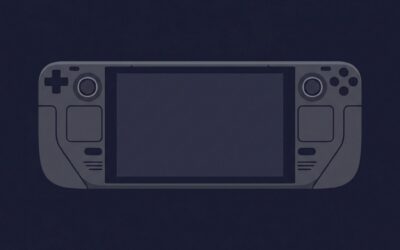
For existing Switch owners, the backward-compatible library and the GameCube app do more to justify an upgrade than the raw hardware numbers do. This is a console built to protect an existing investment first, and to impress on specification sheets a distant second. Competing handhelds running full PC operating systems, Valve’s Steam Deck OLED among them, keep pulling in a different crowd: players who want their entire existing PC library on the go, not a curated Nintendo-only ecosystem. The Switch 2 was never built to win that argument; it was built for the millions of people who already owned Switch games and had little reason to look anywhere else.
Whether the Game-Key Card approach becomes the industry norm as game file sizes keep climbing, or fades out again as cartridge memory gets cheaper, is still an open question nobody at Nintendo has answered directly.
Frequently Asked Questions
Is the Switch 2 backwards compatible?
Yes. The vast majority of the original Nintendo Switch library, both physical Game Cards and digital eShop purchases, works on Switch 2. Save data transfers over through Nintendo's system-to-system transfer tool, and many older titles received Switch 2 compatibility patches through 2026.
How much does the Switch 2 cost?
The console launched at $449.99 USD on June 5, 2025. Nintendo has not raised the U.S. price since launch, though pricing has moved in other regions, including Japan, during 2026.
How many Switch 2 consoles have sold?
Nintendo reported 19.86 million units shipped worldwide as of March 31, 2026, the close of its 2026 fiscal year, beating the company's own forecast of 19 million and putting the console within reach of 20 million in its first ten months.
Does the Switch 2 play GameCube games?
Through the Nintendo GameCube – Nintendo Classics app, an exclusive of Nintendo Switch Online + Expansion Pack available only on Switch 2. It launched alongside the console with The Wind Waker, F-Zero GX, and SoulCalibur II, and had grown to nine titles by April 2026.
What is Joy-Con 2 mouse mode?
The redesigned Joy-Con 2 controllers attach to the console magnetically instead of sliding on rails, and their new sensor lets a Joy-Con be used sideways on a flat surface as a computer mouse. Drag x Drive and select Metroid Prime 4: Beyond controls make use of it.
Can I upgrade my Switch games to Switch 2 Edition?
Some titles do. The Legend of Zelda: Breath of the Wild, for example, got a Switch 2 Edition with smoother framerates and sharper textures, free for Nintendo Switch Online + Expansion Pack members or a $9.99 upgrade pack for existing owners – though it notably excludes the original game's DLC. Not every Switch game gets this treatment.