
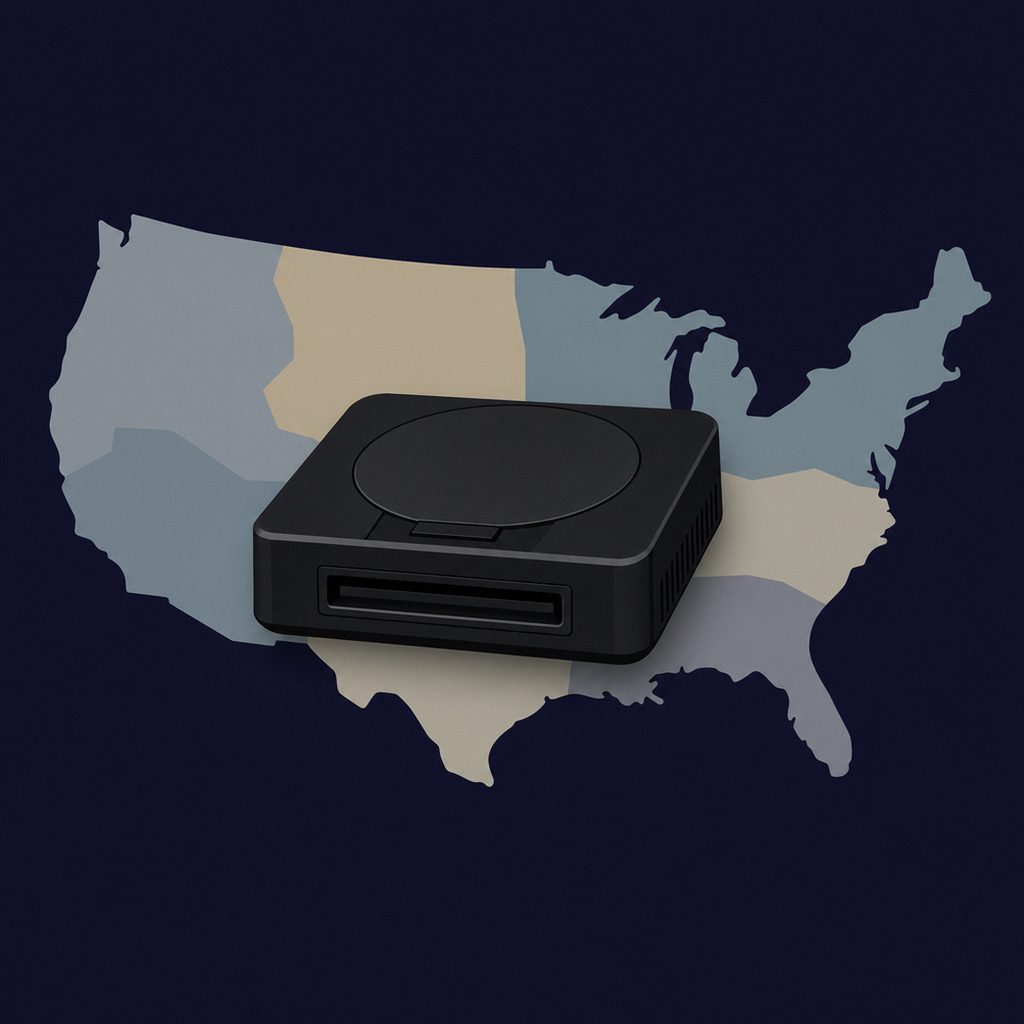
In Japan, this console outsold the Famicom’s direct successor for years and dominated its home market from 1987 onward. In America, the same hardware sold a fraction of what its rival moved and never recovered. NEC’s PC Engine launched in Japan on October 30, 1987, and arrived in the US as the TurboGrafx-16 on August 29, 1989, fifteen days after Sega’s Genesis had already claimed the same market. Thirty-seven years later, it’s worth asking plainly why a console that ruled Japan flopped so completely in America, because the answer isn’t one thing. It’s five things that all happened at once, compounding each other.
Fifteen Days Too Late
Timing did more damage than anything else on this list. Sega test-launched the Genesis in New York and Los Angeles on August 14, 1989, and used those two weeks to plant a flag in the American press as the “next generation” of home consoles. By the time NEC’s system arrived on August 29, journalists and retailers already had a frame for what 16-bit gaming meant, and that frame had Sega’s name attached to it. NEC hadn’t just lost a race by two weeks. It had lost the right to define the terms of the race entirely, and the company never fully got that back for the rest of the console’s American life, no matter what it tried afterward.
A Name That Hedged Its Bets
Here’s a smaller detail worth sitting with for a moment. NEC didn’t bring the console to America under its Japanese name at all. The PC Engine became the TurboGrafx-16, a name built almost entirely around a spec-sheet number, competing directly with the Genesis’s own 16-bit branding, at a moment when the underlying hardware argument was genuinely more complicated than either company let on. The TurboGrafx’s central processor was actually an enhanced 8-bit chip; the “16” in the name referred to elements of the graphics pipeline instead, a technicality Sega’s marketing team was more than happy to let slide unmentioned in public. A console with a confident, established identity in Japan showed up in America wearing a name chosen to win a narrow argument about bits rather than to say anything meaningful about what the machine actually was. That’s not really a launch strategy. It reads more like a company negotiating with itself in public and losing.
The Pack-In Problem
Every launch console lives or dies a little on its pack-in game, and NEC picked poorly here too. Keith Courage in Alpha Zones shipped in the box with the American TurboGrafx-16, and it was, by nearly every account from the period, an unremarkable action-platformer barely known outside the small circle of importers who had already played Japanese PC Engine titles firsthand. Compare that to what Sega was doing with Altered Beast at launch, and later with Sonic the Hedgehog: games built specifically to demonstrate why the hardware mattered to a skeptical buyer standing in a store aisle. NEC had access to a mature, three-year-deep Japanese library by 1989 and chose, for its American introduction, a game that did essentially nothing to prove the console was worth its premium over an aging NES.
Overproduction Before Proof of Demand
NEC’s American operation, run out of Chicago, built roughly 750,000 units for a launch that hadn’t yet demonstrated it could move anywhere near that volume in the real world. That’s not caution. That’s a bet placed on enthusiasm the market hadn’t actually shown yet. When that enthusiasm failed to materialize at the volume NEC’s Chicago team had projected internally, the company was left holding inventory it couldn’t clear at full price, which in turn further undercut the console’s premium positioning almost immediately after launch, well before word of mouth even had a chance to build.
Marketing With No Edge
Sega’s American marketing in this era had a specific, deliberate personality: aggressive, a little mean, built to make Nintendo, and by extension anyone playing something other than a Genesis, look childish by comparison. Nintendo’s marketing, meanwhile, ran on decades of accumulated trust and a mascot everyone already knew from cereal boxes to Saturday morning cartoons. NEC’s American campaigns had neither of those advantages. There was no tagline that stuck in memory, no mascot, no angle that gave American buyers a genuine reason to pick this console over two much better-known rivals fighting for the same shelf space. Just a spec number folded into the name and a library that hadn’t been localized fast enough to matter at launch. A console can be built around raw performance, but without a reason for the average buyer to care, that performance argument tends to stay locked inside the enthusiast press and never reaches the general public.
A Software Company Building Hardware
One structural detail rarely gets mentioned in the American failure story, but it shaped the console from the ground up. NEC wasn’t primarily a games company. It was a huge, diversified electronics and computing conglomerate that partnered with Hudson Soft, a much smaller Japanese software house, to actually design the PC Engine’s architecture and build its early software library. Hudson brought the games expertise; NEC brought the manufacturing scale and retail relationships. That partnership worked well in Japan, where NEC’s existing brand trust and Hudson’s game-design credibility reinforced each other. In America, neither half of that equation carried much weight. Picture yourself as that teenager choosing between a Genesis and a TurboGrafx-16 at a mall kiosk in 1989: NEC’s US electronics reputation meant nothing to you, and Hudson Soft was a name you’d never once heard. A partnership that made perfect sense on its home turf translated into almost nothing recognizable once it crossed the Pacific.
Why Japan Was Different
None of these five problems existed in Japan, which is the part of this story that makes the American failure sting more in hindsight, not less. The PC Engine arrived there in 1987 with a two-year head start on its eventual American launch date, a library that grew steadily for years before Sega or Nintendo’s own next-generation Japanese systems arrived to challenge it directly, and a form factor, genuinely tiny, smaller than a stack of CDs, that fit Japanese retail and living-room expectations in a way American marketing never bothered translating for a Western audience. NEC didn’t fail at making a good console. It failed, specifically and almost entirely, at explaining that console to an American audience that had already made up its mind about two other brands.
What’s Left of It
The TurboGrafx-16 sold roughly 10 million units worldwide against the Genesis’s 30.75 million, and the vast majority of those sales came from Japan rather than America. But the hardware’s reputation has aged unusually well among collectors, specifically because of what NEC actually built rather than how badly it was sold. The CD-ROM² add-on was the first CD-based console peripheral to reach the market anywhere, years ahead of the Sega CD or the original PlayStation, and the Japanese PC Engine library remains one of the more overlooked catalogs in retro collecting circles today. Analogue’s Duo, a boutique FPGA recreation of the original hardware, launched in August 2023, a small, quiet acknowledgment that the console’s underlying design deserved more attention than the American market ever gave it the first time around. Full specs and library detail sit on the TurboGrafx-16 page, alongside the rest of the 16-bit generation on the 1990s console guide.
Frequently Asked Questions
When did the TurboGrafx-16 launch in the US?
August 29, 1989 — fifteen days after Sega's Genesis had already test-launched in New York and Los Angeles on August 14.
Was the TurboGrafx-16 successful in Japan?
Yes. As the PC Engine, it launched in Japan on October 30, 1987 and dominated the Japanese market for years, well before its delayed and troubled American debut under a different name.
Why did NEC change the name from PC Engine to TurboGrafx-16 in America?
NEC rebranded around a bit-count number to compete directly with Sega's 16-bit Genesis marketing, even though the TurboGrafx-16's central processor was actually an enhanced 8-bit chip (the '16' referred to its graphics hardware).
What was the TurboGrafx-16's launch pack-in game?
Keith Courage in Alpha Zones, a little-known action-platformer that did little to demonstrate the console's capabilities compared to Sega's launch titles.
How many TurboGrafx-16 / PC Engine units were sold worldwide?
Approximately 10 million, the large majority in Japan. That compares to the Sega Genesis's 30.75 million worldwide.
Is there a modern version of the TurboGrafx-16?
Analogue released the Duo, an FPGA-based recreation of the hardware, in August 2023 — decades after the original console's American commercial failure.