The PlayStation 4 is a masterclass in learning from failure. After the PS3’s arrogant launch, bloated architecture, and years of catch-up, Sony designed the PS4 around a single principle: make it easy for developers and affordable for consumers. The result was the most dominant console of the 8th generation, selling 117.2 million units worldwide, amassing one of the strongest exclusive libraries in gaming history, and re-establishing PlayStation as the default brand for core gamers.
History & Development
Development of the PS4 began in 2008 under the leadership of Mark Cerny, a veteran game designer and architect who had worked on everything from Marble Madness to Crash Bandicoot. Cerny spent months interviewing developers about their PS3 frustrations. The consensus was unanimous: the Cell processor was brilliant on paper but nightmarish in practice. Developers wanted familiar architecture, unified memory, and tools that didn’t require a PhD in parallel computing.
Sony chose an AMD x86-64 APU — essentially PC hardware — paired with 8 GB of unified GDDR5 RAM. The RAM decision was pivotal. Early prototypes used 4 GB, but Cerny pushed for 8 GB against internal resistance. This proved crucial: the extra memory headroom allowed developers to create increasingly complex games throughout the console’s lifecycle without hitting the wall that constrained the PS3.
The PS4 was announced on February 20, 2013 and launched on November 15, 2013 in North America at $399. Sony’s E3 2013 presentation was devastating to Microsoft: they confirmed the PS4 would play used games, wouldn’t require an internet connection, and cost $100 less than the Xbox One. The audience reaction — standing ovation — signaled the generation’s outcome before a single console shipped.
The PS4 sold 1 million units in 24 hours in North America. Within its first year, it had outsold the Xbox One by roughly 2:1 in most markets. Sony never relinquished the lead.
Hardware & Technical Specifications
The PS4’s AMD Jaguar CPU (8 cores at 1.6 GHz) was not individually powerful — each core was modest by PC standards — but the eight-core design allowed effective parallel processing for game workloads. The AMD Radeon GPU with 18 compute units (1.84 TFLOPS) provided roughly 40% more raw graphics power than the Xbox One’s GPU, a gap that showed in cross-platform titles running at higher resolutions on PS4.
The 8 GB GDDR5 unified memory was the PS4’s key advantage. Unlike the Xbox One’s split memory architecture (8 GB DDR3 + 32 MB ESRAM), the PS4’s unified pool gave developers a single, fast memory space for both CPU and GPU operations. This simplified development and allowed more flexible allocation between system functions and game rendering.
The DualShock 4 controller was a significant evolution: a front-facing touchpad, a light bar for player identification and in-game effects, a built-in speaker, improved analog sticks with concave tops, and a 3.5mm headphone jack. The Share button — dedicated to capturing screenshots and video — reflected Sony’s recognition that gaming had become a social, broadcast-ready activity.
The PS4 Pro (November 2016) introduced a mid-generation hardware refresh: 4.2 TFLOPS GPU, support for 4K output (via checkerboard rendering in most titles), and HDR support. It was the first time a console manufacturer had released a significantly more powerful version mid-cycle without creating a separate game library — all PS4 games ran on both models.
Game Library & Legacy
The PS4’s game library earned a perfect 10 rating for good reason. Sony’s first-party studios delivered an extraordinary run of exclusive titles that defined the generation:
Bloodborne (2015) — FromSoftware’s PS4 exclusive and spiritual successor to Dark Souls — is regarded as one of the greatest action RPGs ever made. Uncharted 4: A Thief’s End (2016) raised the bar for cinematic action-adventure gaming. Horizon Zero Dawn (2017) introduced a stunning open world of robotic dinosaurs. God of War (2018) reinvented the series with Norse mythology and a single-shot camera, winning universal Game of the Year acclaim. Marvel’s Spider-Man (2018) delivered the definitive superhero gaming experience. The Last of Us Part II (2020) pushed narrative gaming into genuinely uncomfortable territory.
Beyond exclusives, the PS4 became the default platform for third-party titles, with consistent performance advantages over the Xbox One in cross-platform games. The indie game explosion also found a natural home on PS4, with titles like Hollow Knight, Celeste, and Hades reaching massive audiences.
Models & Variants
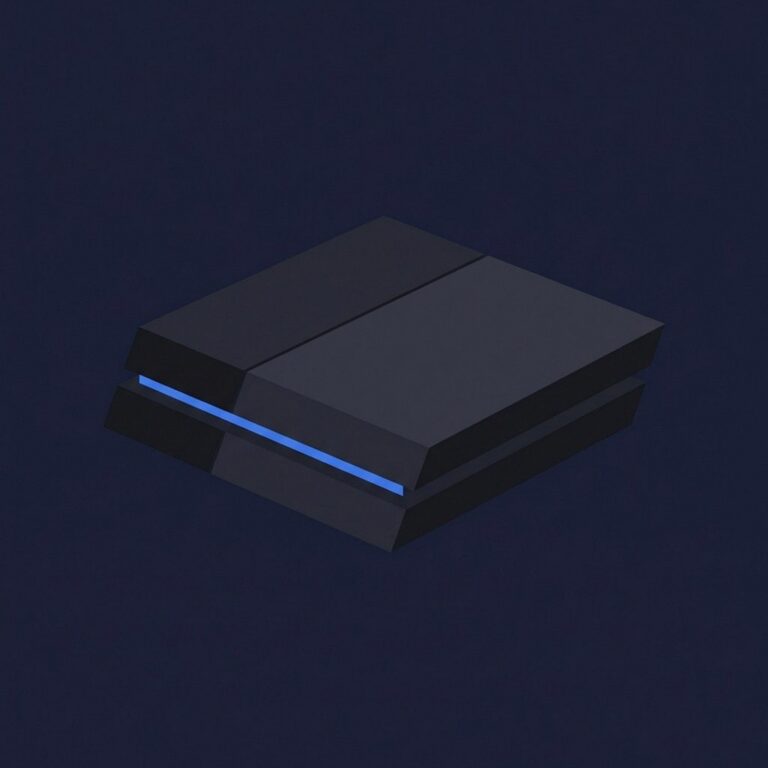
Three primary PS4 models were produced. The original PS4 (CUH-1000 series) featured an angular, two-tone design. The PS4 Slim (CUH-2000, September 2016) reduced the size and power consumption while maintaining identical performance. The PS4 Pro (CUH-7000, November 2016) added enhanced graphics for 4K displays. Numerous limited edition variants were produced — the 20th Anniversary Edition (styled after the original PS1’s gray), various game-branded editions, and regional exclusives.
Collecting & Value Today
Standard PS4 consoles are readily available at $150-250 USD depending on model and storage. The PS4 Pro commands a slight premium. Limited editions vary widely — the 20th Anniversary Edition sells for $400-800+ sealed. Game prices remain low for most titles, with the vast majority available for $5-20. The PS4 is too recent for nostalgia-driven collecting, but its enormous library and continued functionality (many games received PS5 patches) make it an excellent value proposition for gamers.