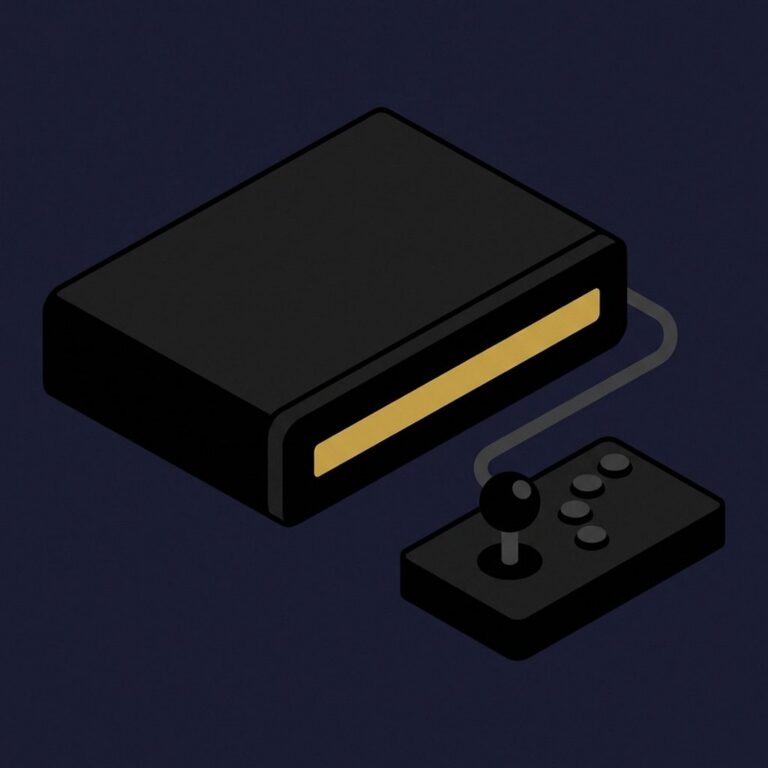
The SNK Neo Geo AES (Advanced Entertainment System) is the most extravagant home console ever produced. Launched in 1990 at $649.99 — with individual game cartridges costing $200 to $600 — the Neo Geo was never meant for the average consumer. It was an arcade system in your living room, running hardware identical to the MVS (Multi Video System) arcade cabinets found in game centers worldwide. For fighting game enthusiasts and arcade purists willing to pay premium prices, the Neo Geo delivered an experience no other home console could match.
History & Development
SNK Corporation, founded in 1978 in Osaka, Japan, was primarily an arcade game manufacturer known for titles like Ikari Warriors, Athena, and Psycho Soldier. In the late 1980s, SNK conceived an ambitious plan: create a single hardware platform that could serve both arcade operators and home consumers. The arcade version (MVS) would use interchangeable game cartridges in a shared cabinet, reducing costs for operators. The home version (AES) would use the same cartridges — same hardware, same games, perfect arcade accuracy.
The Neo Geo AES launched in Japan on April 26, 1990 and in North America on August 22, 1990. Initially marketed through hotel rooms and airline lounges as a rental system, SNK shifted to direct retail sales when demand proved stronger than expected. The console was sold through specialty retailers and direct mail order, never through mainstream chains — its price point guaranteed a niche audience.
SNK supported the Neo Geo for seven years, with the final AES cartridge (The Last Blade 2) releasing in 1998. The MVS arcade platform continued receiving new games until 2004, making the Neo Geo hardware one of the longest-supported platforms in gaming history.
Hardware & Technical Specifications
The Neo Geo’s power came from its Motorola 68000 CPU at 12 MHz handling main processing, paired with a Zilog Z80A at 4 MHz dedicated to audio control. The custom LSPC2-A2 graphics processor and NEO-B1 sprite generator could display 380 sprites simultaneously, each up to 16×512 pixels, with 4,096 colors on screen from a palette of 65,536. The sprite capabilities were extraordinary — no other consumer hardware could match the Neo Geo’s ability to render large, detailed, smoothly animated characters.
Audio was handled by the Yamaha YM2610, a sophisticated sound chip featuring 15 simultaneous channels: 4 FM synthesis, 3 SSG (Programmable Sound Generator), 7 ADPCM-A (for sound effects), and 1 ADPCM-B (for voice and music samples). This produced rich, layered audio that was, once again, identical to the arcade experience.
The cartridge format was key to the Neo Geo’s performance. While competitors used CD-ROMs with loading times, Neo Geo cartridges provided instant access to up to 716 Mbit (89.5 MB) of data — massive by early-1990s standards. Later titles like The King of Fighters 2003 (MVS) pushed cartridge sizes to the limit. The trade-off was cost: manufacturing these large ROM boards was expensive, which directly translated to the punishing retail prices.
Game Library & Legacy
The Neo Geo’s 148 AES games represent one of the most focused libraries in console history. This was not a system for platformers, RPGs, or sports simulations. The Neo Geo was, above all else, a fighting game machine.
The King of Fighters series (1994-2003) was SNK’s flagship — annual team-based fighters that built one of the most passionate competitive communities in gaming, particularly in Latin America, Asia, and the Middle East where KOF rivaled Street Fighter in popularity. Fatal Fury (1991-1999) and its spin-off Garou: Mark of the Wolves (1999) — widely considered one of the greatest fighting games ever made — showcased SNK’s evolving design philosophy. Samurai Shodown (1993) brought weapons-based combat with a focus on spacing and precision over combos. Art of Fighting pioneered scaling sprites and desperation moves.
Beyond fighters, the Neo Geo excelled at run-and-gun action games: the Metal Slug series (1996-2006) set the standard for 2D sprite animation, with hand-drawn visuals so detailed and expressive that they remain breathtaking today. Blazing Star and Pulstar were excellent shoot-em-ups. Windjammers (1994) — a frisbee-throwing competitive game — has experienced a cult revival, with a modern sequel released in 2022.
Models & Variants
The AES had minimal hardware revision. The original console (NEO-0 motherboard) was followed by cost-reduced revisions (NEO-1, NEO-2) with no performance differences. All AES consoles are functionally identical. The system came in matte black with a distinctive angular design that communicated premium quality.
The Neo Geo CD (1994) was SNK’s attempt to make the platform affordable. Priced at $299 (later $199 for the CDZ top-loading revision), it played Neo Geo games on standard CDs at dramatically lower prices ($49-79 vs. $200-600 for AES carts). The fatal compromise was the 1X CD-ROM drive — loading times of 30-60+ seconds between stages were agonizing, especially in fighting games where players expected instant round transitions. The Neo Geo CDZ improved loading somewhat with a faster drive, but the fundamental limitation remained.
The Neo Geo Pocket (1998) and Neo Geo Pocket Color (1999) were excellent handheld consoles with superb fighting games — SNK vs. Capcom: Match of the Millennium is a gem — but they arrived too late to compete with the Game Boy Color and were discontinued when SNK went bankrupt in 2001.
Collecting & Value Today
The Neo Geo AES is the most expensive mainstream console to collect for. A working AES console sells for $250-500+ USD depending on condition, box, and included accessories. The arcade-style joystick controller — a heavy, microswitched stick with four action buttons — is itself collectible at $80-150+.
Game prices are stratospheric. Kizuna Encounter (the rarest common AES title) sells for $5,000-15,000+. Matrimelee, The Last Blade 2, and Blazing Star command $1,000-3,000+ complete. Even common titles like Fatal Fury 2 or Art of Fighting start at $100-200. Complete-in-box pricing for Neo Geo games can reach five figures for rare titles — the system is closer to fine art collecting than traditional game collecting.
The AES hardware is virtually indestructible. With no moving parts, no disc drive, and industrial-quality construction designed for arcade environments, working Neo Geo units from 1990 are common. The cartridge connectors may need cleaning, and some early power supplies have failed, but the console itself has a durability rating of 10 — the most reliable consumer gaming hardware ever produced.
For collectors priced out of AES cartridges, the MVS arcade format offers the same games at a fraction of the cost. MVS cartridges are far cheaper ($20-200 for most titles vs. $100-5,000+ for AES), and consolized MVS units (arcade boards modified for home TV use) provide the authentic Neo Geo experience for a fraction of the AES price. This has become the preferred entry point for Neo Geo gaming, though AES purists will accept no substitute.