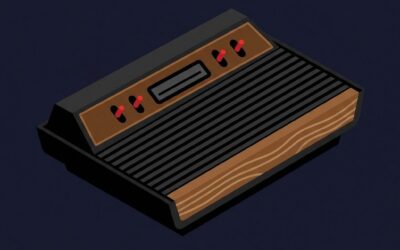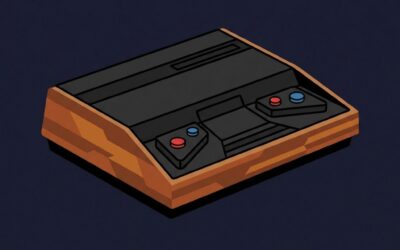
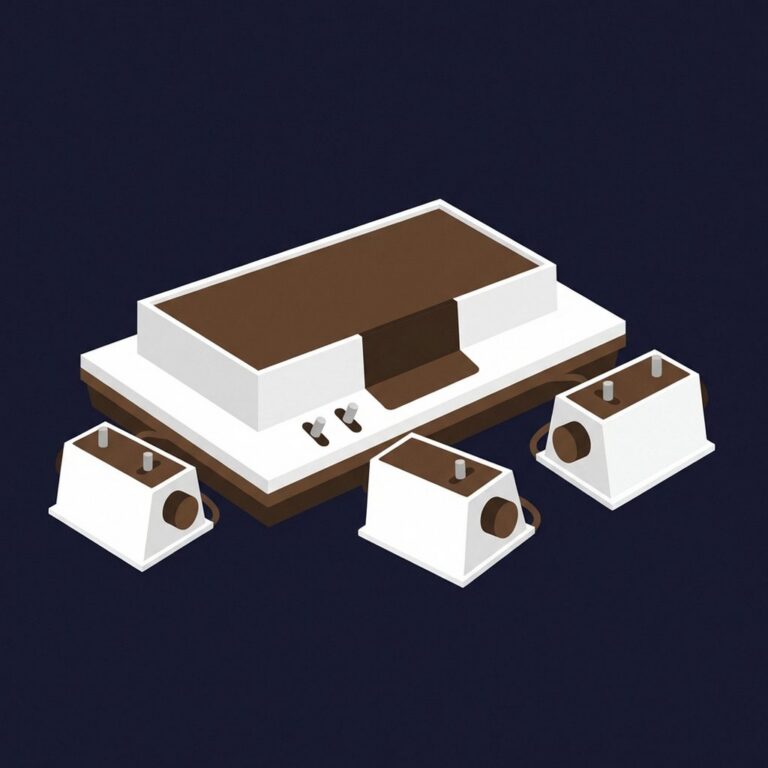
The Magnavox Odyssey is where it all began. Released in September 1972, it was the world’s first commercial home video game console — a device so primitive it had no sound, no score display, and required players to keep track of points manually. Yet this unassuming brown box, designed by Ralph Baer at Sanders Associates, created the home video game industry. Every console that followed — from the Atari 2600 to the PlayStation 5 — exists because Baer proved that interactive electronic entertainment belonged in the living room.
History & Development
Ralph Baer, a German-born American engineer, conceived the idea of playing games on a television set in 1966 while waiting for a colleague at a bus terminal. Working at defense contractor Sanders Associates in New Hampshire, Baer and colleagues Bill Harrison and Bill Rusch developed a series of prototypes, culminating in the “Brown Box” — a working game console demonstrated to television manufacturers starting in 1968.
Magnavox licensed the technology and released it as the Odyssey on September 1, 1972, initially sold through Magnavox dealerships. This limited distribution was a critical mistake — many consumers believed the Odyssey only worked with Magnavox televisions (it worked with any brand). The console retailed for $99.95 and came bundled with accessories: dice, poker chips, game cards, and translucent screen overlays that players taped to the TV to provide backgrounds (fields, mazes, haunted houses) that the console’s primitive graphics couldn’t render.
The Odyssey sold approximately 350,000 units between 1972 and 1975 — modest but enough to prove the concept. Nolan Bushnell attended an Odyssey demonstration before creating Pong at Atari, leading to a patent infringement lawsuit that Magnavox won. Baer’s patents would generate millions in licensing fees over the following decades.
Hardware & Technical Specifications
The Odyssey contained no microprocessor, no memory, and no software in any modern sense. It used discrete transistor logic — approximately 40 transistors and 40 diodes on hand-wired circuit boards. The console generated three white dots on a black screen: two player-controlled paddles and one “ball.” That was the extent of its graphical capability.
Games were “loaded” via plug-in circuit cards — plastic cards with jumper connections that reconfigured the console’s circuits to change game behavior (ball speed, paddle size, number of dots displayed). There were 28 game cards in total, though many produced nearly identical gameplay with different overlays and rule sets. In truth, the Odyssey played variations of the same basic concept: hit a dot with your paddle.
The console had no audio output whatsoever — it was completely silent. There was no on-screen scoring — players tracked points manually with included cards and chips. The controllers were two rectangular boxes with horizontal and vertical knobs and an “English” knob that added spin to the ball’s trajectory.
Game Library & Legacy
The Odyssey’s 28 games are more like rule variations than distinct titles. Table Tennis (the pack-in game) was the signature experience — essentially Pong before Pong existed. Football, Hockey, Ski, and Cat and Mouse used different overlays and rules but the same basic three-dot gameplay. Shooting Gallery utilized the optional light rifle — a peripheral that detected the ball dot on screen, making it arguably the first light gun game.
The most ambitious game was Invasion, a simple wargame that combined the console’s electronic gameplay with a physical board game overlay. Several Odyssey games incorporated board game elements — cards, play money, game boards — reflecting an era when the line between electronic and physical gaming hadn’t yet been drawn.
Models & Variants
The original Odyssey was the only model with interchangeable game cards. Magnavox followed it with a series of dedicated Pong-style consoles: the Odyssey 100, 200, 300, 400, 500, 2000, 3000, and 4000 — each with built-in games and no interchangeable media. These were simpler, cheaper alternatives that rode the Pong wave of the mid-1970s. The unrelated Magnavox Odyssey² (1978) was a true successor with a cartridge-based system and built-in keyboard.
Collecting & Value Today
The Magnavox Odyssey is the holy grail of console collecting. A complete unit in original box with all overlays, game cards, and accessories sells for $500-1,500+ USD. Boxed units in excellent condition have exceeded $3,000 at auction. Even loose units without accessories command $150-300.
Condition is everything with the Odyssey. The screen overlays — thin plastic sheets — are often missing, damaged, or yellowed. The game cards’ electrical contacts can corrode. The RF switch box may need replacement. The console itself is mechanically simple and generally reliable, but the complete accessory set is what drives collector value. A truly complete Odyssey with all 12 original games, overlays, cards, chips, dice, and the light rifle in clean condition is one of the most valuable items in gaming history.