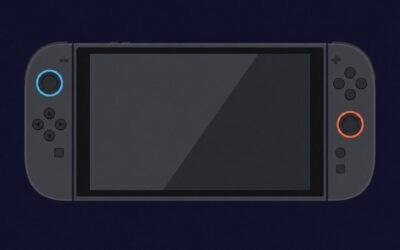

The Valve Steam Deck is not technically a console — it’s a handheld Linux PC running a custom operating system. But its impact on console gaming has been profound. By putting a full Steam library of over 70,000 games into a portable form factor at $399, Valve created something no traditional console manufacturer had attempted: a handheld that plays the same games as your desktop PC, with no compromises on library access and no walled-garden restrictions. The Steam Deck didn’t just compete with the Switch — it created an entirely new category.
History & Development
Valve’s history with hardware was rocky. The Steam Machines (2015) — third-party PCs running SteamOS — flopped due to inconsistent hardware, poor game compatibility, and a confusing value proposition against Windows PCs. The Steam Controller (2015) was innovative but divisive. The Steam Link (2015) for game streaming was discontinued. None gained traction.
The Steam Deck, announced on July 15, 2021, was different. This time, Valve designed the hardware themselves and controlled the entire experience. They partnered with AMD to create a custom APU (Aerith) combining Zen 2 CPU cores with RDNA 2 graphics — the same architectures powering the PS5 and Xbox Series X, scaled down for a 15-watt power envelope.
Pre-orders opened immediately and reservations stretched into months. The Steam Deck shipped on February 25, 2022 in three tiers: 64 GB eMMC ($399), 256 GB NVMe ($529), and 512 GB NVMe with anti-glare etched glass ($649). All three models were identical in processing power — storage and screen treatment were the only differences.
The Steam Deck OLED (November 2023) was a significant mid-cycle revision: a 7.4-inch HDR OLED display (up from 7-inch LCD), larger 50 Wh battery (up from 40 Wh, adding 30-50% play time), Wi-Fi 6E, and a more power-efficient APU revision. Priced from $549, the OLED model was universally praised as the definitive version.
Hardware & Technical Specifications
The Steam Deck’s custom AMD APU features a 4-core/8-thread Zen 2 CPU at 2.4-3.5 GHz paired with an RDNA 2 GPU (8 CUs, 1.0-1.6 GHz). Peak GPU performance of 1.6 TFLOPS places it between the Switch (0.4 TFLOPS docked) and the PS4 (1.84 TFLOPS) — impressive for a handheld but modest by PC standards. The 16 GB LPDDR5 RAM at 5500 MT/s provides adequate bandwidth for the GPU.
The 1280×800 display (16:10 aspect ratio) is the key to the Steam Deck’s performance trick: by targeting a relatively low resolution, the GPU can maintain playable frame rates in games designed for 1080p or higher on desktop PCs. Most modern AAA games run at 30-60 fps on medium-to-low settings, while older titles and indie games run effortlessly at 60 fps on high settings.
Controls include two analog sticks, a D-pad, ABXY buttons, two trackpads (capacitive, with haptic feedback), four rear grip buttons, and gyroscope support for motion aiming. The trackpads are particularly significant — they enable mouse-precision input for games designed for keyboard and mouse, making genres like real-time strategy, city builders, and point-and-click adventures viable on a handheld.
Game Library & Legacy
The Steam Deck’s library is, theoretically, the entire Steam catalog — over 70,000 games. In practice, compatibility varies. Valve implemented a “Deck Verified” rating system: games are classified as Verified (works perfectly), Playable (works with minor issues or configuration), Unsupported (doesn’t work), or Unknown. As of 2025, over 10,000 games are Verified or Playable.
The Steam Deck runs SteamOS 3.0, a custom Linux distribution based on Arch Linux with Proton — Valve’s Windows compatibility layer built on Wine. Proton translates Windows API calls to Linux equivalents, enabling the vast majority of Windows-native Steam games to run without modification. The technology is remarkable: games like Elden Ring, Cyberpunk 2077, Baldur’s Gate 3, and God of War run on what is fundamentally a Linux handheld.
Anti-cheat software remains the primary compatibility barrier — some online games using Easy Anti-Cheat or BattlEye work on Deck, while others don’t, depending on whether developers have enabled Linux support. Single-player and cooperative games generally run without issues.
Beyond Steam, the Deck’s open platform allows users to install Windows, emulators (running retro consoles from NES to PS2), alternative storefronts (Epic, GOG via Heroic Launcher), and essentially any PC software. This openness — Valve actively encourages users to modify and tinker with the device — is a philosophical statement: the Steam Deck is yours, not Valve’s.
Models & Variants
Two hardware generations exist: the original Steam Deck LCD (February 2022, three storage tiers) and the Steam Deck OLED (November 2023, two tiers: 512 GB and 1 TB). A limited edition translucent Steam Deck OLED (1 TB) was produced in small quantities. The original 64 GB eMMC model was discontinued when the OLED launched. All models support microSD expansion up to 1 TB+ for additional game storage.
Valve also sells the Steam Deck Docking Station ($89) — a USB-C dock with HDMI 2.0, DisplayPort 1.4, USB-A, Ethernet, and USB-C passthrough charging — enabling desktop-like use on a TV or monitor.
Collecting & Value Today
The Steam Deck is a current platform with no collector premium. OLED models retail at $549-649; original LCD models sell used for $250-350. The open nature of the platform — no exclusive games, no walled ecosystem — means the Steam Deck’s long-term collecting value is likely minimal. Its significance is historical rather than material: the Steam Deck proved that handheld PC gaming was commercially viable, spawning competitors from ASUS (ROG Ally), Lenovo (Legion Go), and MSI (Claw), and establishing a new product category that didn’t exist before 2022.