The Atari 5200 SuperSystem should have been a triumph. Built on the proven Atari 800 computer architecture with superior graphics and sound capabilities, the 5200 was technically impressive and played excellent versions of Atari’s arcade hits. Instead, it became a cautionary tale about how terrible controllers, lack of backward compatibility, and catastrophic market timing can destroy a capable console. Released in November 1982 — just months before the video game crash — the 5200 sold approximately 1 million units before Atari pulled the plug in 1984.
History & Development
Atari developed the 5200 as a successor to the massively popular Atari 2600. Rather than designing new hardware from scratch, they adapted the architecture of their Atari 400/800 home computers — the same MOS 6502C CPU, the same ANTIC display chip, the same POKEY sound chip. This made the 5200 significantly more powerful than the 2600 but also essentially a computer without a keyboard.
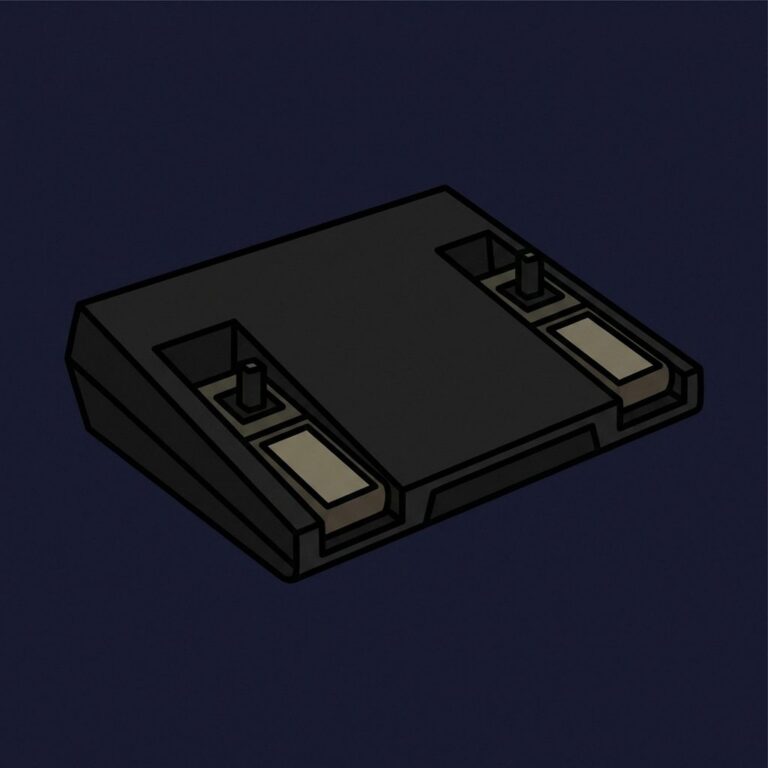
The console launched in November 1982 at $269 in a massive, elongated case designed to hold controllers in built-in storage bays. Atari marketed it as the premium gaming experience, positioned above the aging 2600.
Two critical decisions doomed the 5200. First, despite sharing the 800’s architecture, Atari chose not to include backward compatibility with 2600 cartridges — an inexplicable decision given that millions of 2600 owners had extensive game libraries. A 2600 adapter was released later but too late. Second, the 5200 launched just as the video game market was beginning to collapse. By 1983, retailers were drowning in unsold inventory, and the 5200 — as a premium product — was particularly vulnerable.
Hardware & Technical Specifications
The 5200’s MOS 6502C at 1.79 MHz was paired with the ANTIC chip (handling display list processing) and the GTIA chip (providing color and player/missile graphics). Together, they could display 256 colors with hardware scrolling, player/missile (sprite) graphics, and multiple display modes — capabilities that dwarfed the 2600’s TIA chip.
The POKEY audio chip provided 4 channels of sound with envelope control and could generate complex waveforms. It also handled controller input and serial I/O. The combination of ANTIC, GTIA, and POKEY made the 5200 one of the most capable 8-bit gaming platforms of its era.
The controller was the 5200’s fatal flaw. It featured a non-centering analog joystick — the stick stayed wherever you left it rather than snapping back to center. This made precise gameplay infuriating in titles that required quick directional changes. The keypad overlay system (different overlays for different games) was clever in theory but fiddly in practice. The controller flex cable was fragile and prone to failure. Third-party replacement controllers became essential for serious 5200 gaming.
Game Library & Legacy
The 5200’s 69 official games were largely arcade ports and adaptations of Atari 800 computer titles. Super Breakout, Galaxian, Space Invaders, Pac-Man (a vastly superior version to the infamous 2600 port), Centipede, and Missile Command all looked and played significantly better than their 2600 counterparts. Moon Patrol, Joust, Robotron: 2084, and Pitfall II were highlights. Had the controller not been abysmal and the market not collapsed, the 5200 could have been an excellent platform.
Collecting & Value Today
The 5200 is moderately collectible. Working consoles sell for $80-150 USD. The biggest challenge is the controllers — original controllers in working condition are increasingly rare due to the fragile internal flex circuit. Third-party controllers and modern USB adapters are recommended for actual gameplay. Most games are affordable at $5-30, with a few rare titles like Bounty Bob Strikes Back and Pitfall II commanding $50-100+.