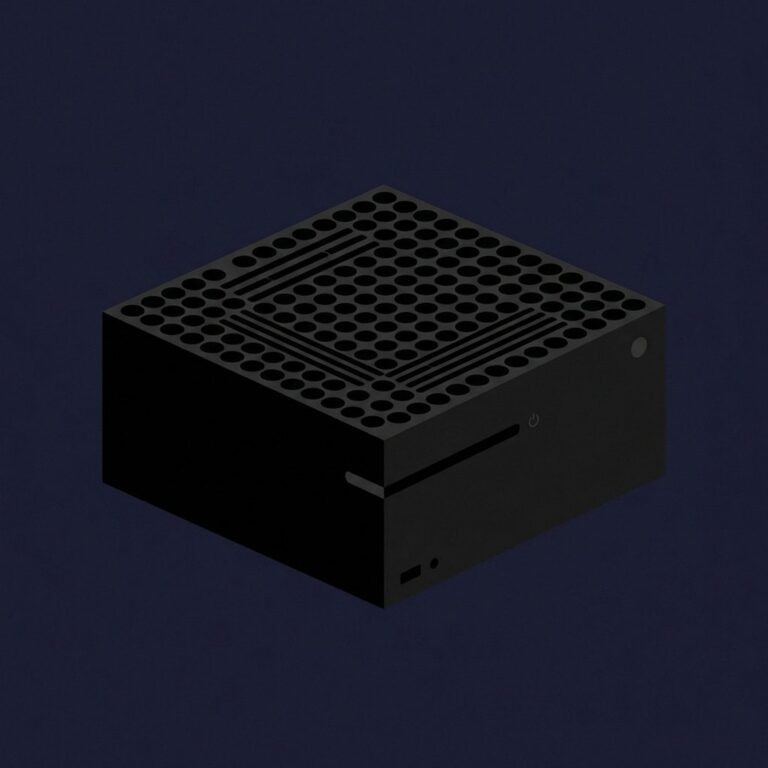
The Xbox One launched in North America, parts of Europe, Australia and South America on November 22, 2013, and later in Japan on September 4, 2014. It is Microsoft’s eighth-generation console.
The Xbox One is a cautionary tale about reading the room. Microsoft envisioned an all-in-one entertainment hub — TV integration, voice commands via Kinect, always-online connectivity, and digital-first game ownership. Consumers wanted a game console. The disastrous 2013 reveal and subsequent policy reversals cost Microsoft the generation, but the Xbox One’s story is also one of remarkable recovery: Game Pass, backward compatibility, and the Xbox One X demonstrated that Microsoft could learn from its mistakes, even if it couldn’t undo them.
History & Development
Microsoft’s Xbox One was revealed on May 21, 2013 at a dedicated event focused heavily on television integration, sports partnerships, and the Kinect sensor. The gaming community’s response was hostile. Worse, Microsoft confirmed that the Xbox One would require a 24-hour online check-in, that used games would be restricted, and that the Kinect would be mandatory and always-on. Privacy concerns and anti-consumer sentiment exploded across social media.
At E3 2013, Sony exploited every misstep. The PS4 was $100 cheaper, had no online requirements, and supported used games without restriction. Microsoft reversed nearly every controversial policy within weeks — but the damage was done. The narrative was set: Xbox One was the console made by a company that didn’t understand gamers.
The Xbox One launched on November 22, 2013 at $499 (including the mandatory Kinect). It sold well initially but was consistently outsold by the PS4 in nearly every market. In June 2014, Microsoft released a Kinect-free SKU at $399, matching the PS4’s price. Under new Xbox leadership from Phil Spencer (appointed head of Xbox in March 2014), the platform shifted decisively toward games and services.
Hardware & Technical Specifications
The Xbox One used the same AMD Jaguar x86-64 architecture as the PS4, but with key differences. The CPU ran slightly faster at 1.75 GHz (vs. 1.6 GHz), but the GPU had only 12 compute units (1.31 TFLOPS) versus the PS4’s 18 CUs (1.84 TFLOPS). Memory was 8 GB DDR3 supplemented by 32 MB of fast ESRAM — a more complex architecture than the PS4’s unified GDDR5. The practical result: many cross-platform games ran at 900p on Xbox One versus 1080p on PS4, a visible and marketable difference.
The Kinect 2.0 was genuinely impressive technology — 1080p camera, infrared depth sensing, improved voice recognition, and the ability to track six people simultaneously. But consumers didn’t want it bundled at $100 extra, and few games used it meaningfully. Microsoft eventually stopped manufacturing the Kinect and dropped the requirement entirely.
The Xbox One S (August 2016) was a crucial redesign: 40% smaller, included a 4K UHD Blu-ray drive, and supported HDR gaming. The Xbox One X (November 2017) was Microsoft’s answer to the PS4 Pro — and it was significantly more powerful: 6 TFLOPS GPU, 12 GB GDDR5 RAM, and true native 4K in many titles. At launch, the Xbox One X was the most powerful console ever made.
Game Library & Legacy
The Xbox One’s library was its persistent weakness compared to PlayStation. Microsoft’s first-party studios struggled to deliver system-selling exclusives consistently. Halo 5: Guardians (2015) was technically solid but divisively received. Forza Horizon 3 (2016) and Forza Horizon 4 (2018) were the platform’s undisputed highlights — stunning open-world racing that had no PlayStation equivalent. Gears of War 4 and 5 were competent but lacked the cultural impact of earlier entries. Sunset Overdrive (2014) was a creative gem that deserved more attention.
Microsoft’s most significant contribution to the generation was Xbox Game Pass (launched June 2017) — a subscription service offering access to hundreds of games for a monthly fee. Game Pass, especially the Ultimate tier (which included Xbox Live Gold, PC Game Pass, and cloud streaming), fundamentally changed the value proposition of console gaming. First-party titles launched day-one on Game Pass, eliminating the $60-70 purchase barrier.
Backward compatibility was the other triumph. Under Phil Spencer, the Xbox team invested heavily in making Xbox 360 and original Xbox games playable on Xbox One — eventually supporting over 600 titles with enhanced resolution and performance. Sony offered nothing comparable on PS4.
Models & Variants
Four primary Xbox One models were produced: the original Xbox One (large, VCR-like design with external power brick), the Xbox One S (compact, internal power supply, 4K Blu-ray), the Xbox One S All-Digital Edition (no disc drive, $249), and the Xbox One X (premium 4K gaming). The original model is the least desirable today due to its size and power brick. Various limited editions were produced — Halo 5, Gears of War 4, Minecraft, and Cyberpunk 2077 themed variants among the most notable.
Collecting & Value Today
Xbox One consoles are among the most affordable current-generation systems. Original models sell for $80-120 USD, the S for $120-180, and the One X for $180-280. Game prices are extremely low — most titles are under $10, and Game Pass further reduces the incentive for physical collecting. The Xbox One’s long-term collector value is likely limited by its small exclusive library and Microsoft’s strategy of releasing Xbox games simultaneously on PC. The One X, as the most powerful variant, may hold modest collector interest as a technical curiosity.
November 22, 2013 across North America, Europe, Australia and South America, and September 4, 2014 in Japan. $499 in the US (€499 / £429) — $100 more than the PlayStation 4, because the bundle mandatorily included the Kinect sensor. The required Kinect bundle. Microsoft removed it in 2014 and dropped the price to $399. Microsoft never released official lifetime numbers; industry estimates put it around 58 million units. Yes — it plays a large curated list of Xbox 360 and original Xbox games via emulation, a program that began in November 2015. The Xbox Series X and Series S, released November 10, 2020.
Frequently Asked Questions
When did the Xbox One come out?
How much did the Xbox One cost at launch?
Why did the Xbox One launch at a higher price than the PS4?
How many Xbox One consoles were sold?
Is the Xbox One backward compatible?
What replaced the Xbox One?