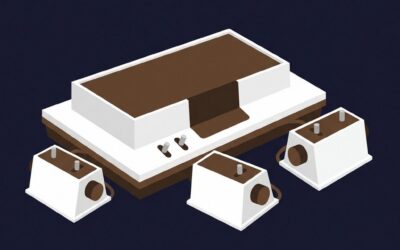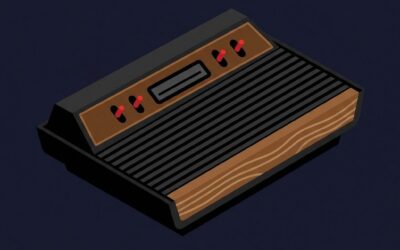
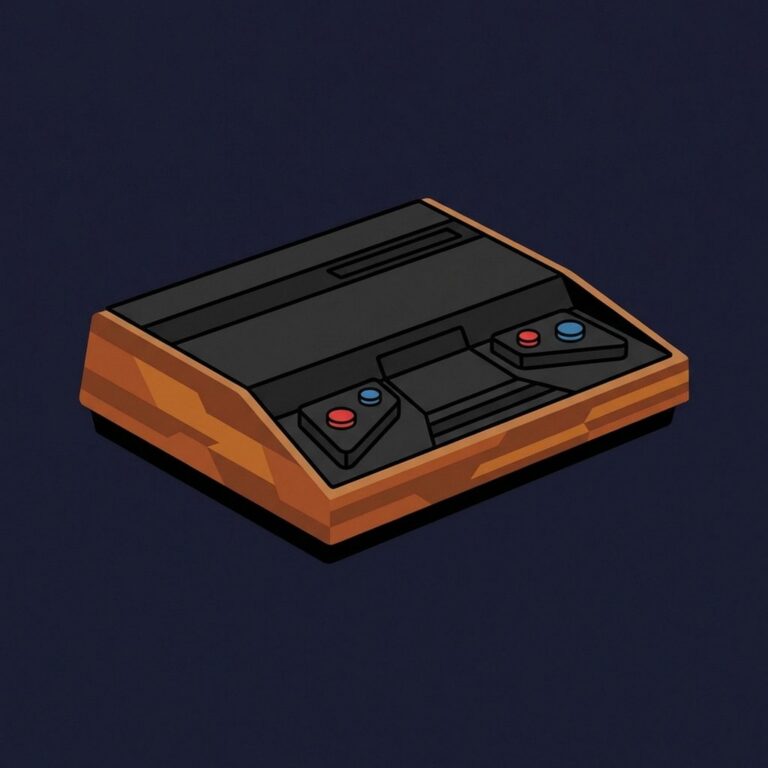
The Fairchild Channel F is one of the most historically significant consoles ever made, yet one of the least remembered. Released in November 1976, it was the first console to use interchangeable ROM cartridges — the innovation that made the entire home video game industry possible. Before the Channel F, home consoles had games permanently built in. After it, games became software that could be bought, sold, and collected separately from the hardware. The Atari 2600, which arrived a year later and received all the credit, was directly inspired by the Channel F’s cartridge concept.
History & Development
The Channel F was developed by Fairchild Semiconductor, a pioneering Silicon Valley company whose contributions to computing — inventing the integrated circuit, co-founding the semiconductor industry — far exceeded its consumer electronics ambitions. Engineer Jerry Lawson, one of the few African Americans in the semiconductor industry at the time, led the design of the console and its cartridge system.
Lawson’s key insight was that games could be stored on ROM chips inside removable cartridges — called “Videocarts” — rather than hardwired into the console. Each Videocart contained a ROM chip with game code that the console’s processor could read and execute. This seems obvious in retrospect, but in 1976 it was genuinely revolutionary. No consumer device had used interchangeable ROM media before.
The console was originally sold as the “Video Entertainment System” (VES) but was renamed to “Channel F” (the F standing for “fun”) after Atari released the competing Video Computer System in 1977. The Channel F retailed for $169.95 — expensive for 1976, when Pong consoles cost $50-100.
The Channel F sold approximately 250,000 units. It was commercially overshadowed by the Atari 2600, which launched with better graphics, more games, and significantly stronger marketing. Fairchild released an updated Channel F System II in 1979 (with a sleeker design and detachable controllers) before exiting the market.
Hardware & Technical Specifications
The Channel F used the Fairchild F8 CPU at 1.79 MHz — Fairchild’s own 8-bit microprocessor, making it also the first cartridge-based console to use a programmable microprocessor (the Magnavox Odyssey used discrete transistor logic, not a CPU). The F8 was capable but quirky, with an unusual instruction set that made programming challenging.
Graphics were primitive even by 1976 standards: a resolution of 128×64 pixels (102×58 visible) with 8 colors. The display was generated by custom video hardware integrated with the F8. Audio consisted of three fixed tones (500 Hz, 1 kHz, and 1.5 kHz) played through a built-in speaker — not the television. The controllers were built into the console: two triangular grip controllers that could be pushed, pulled, twisted, and tilted in eight directions. They were unusual and somewhat awkward but surprisingly versatile.
Game Library & Legacy
The Channel F received 27 Videocarts, each typically containing one or two simple games. Hockey and Tennis (Videocart 1) were the launch titles. Desert Fox (tank combat), Space War, Dodge It (a maze game), and Alien Invasion (a Space Invaders clone, released after the arcade hit) were among the more sophisticated titles. Videocart 20: Video Whizball is considered one of the rarest and most collectible cartridges.
The games were simple but represented genuine interactive entertainment running on programmable software — a fundamental conceptual leap from the hardwired Pong variants that preceded them.
Collecting & Value Today
The Channel F is a niche but respected collector’s item. Working consoles sell for $100-200 USD. The System II variant is somewhat cheaper. Videocarts range from $10-30 for common titles to $50-150+ for rare ones. Complete-in-box systems are highly sought after and can exceed $400+. The console’s historical significance as the first cartridge system gives it an importance that transcends its gameplay — this is a museum piece for serious gaming historians.